depends
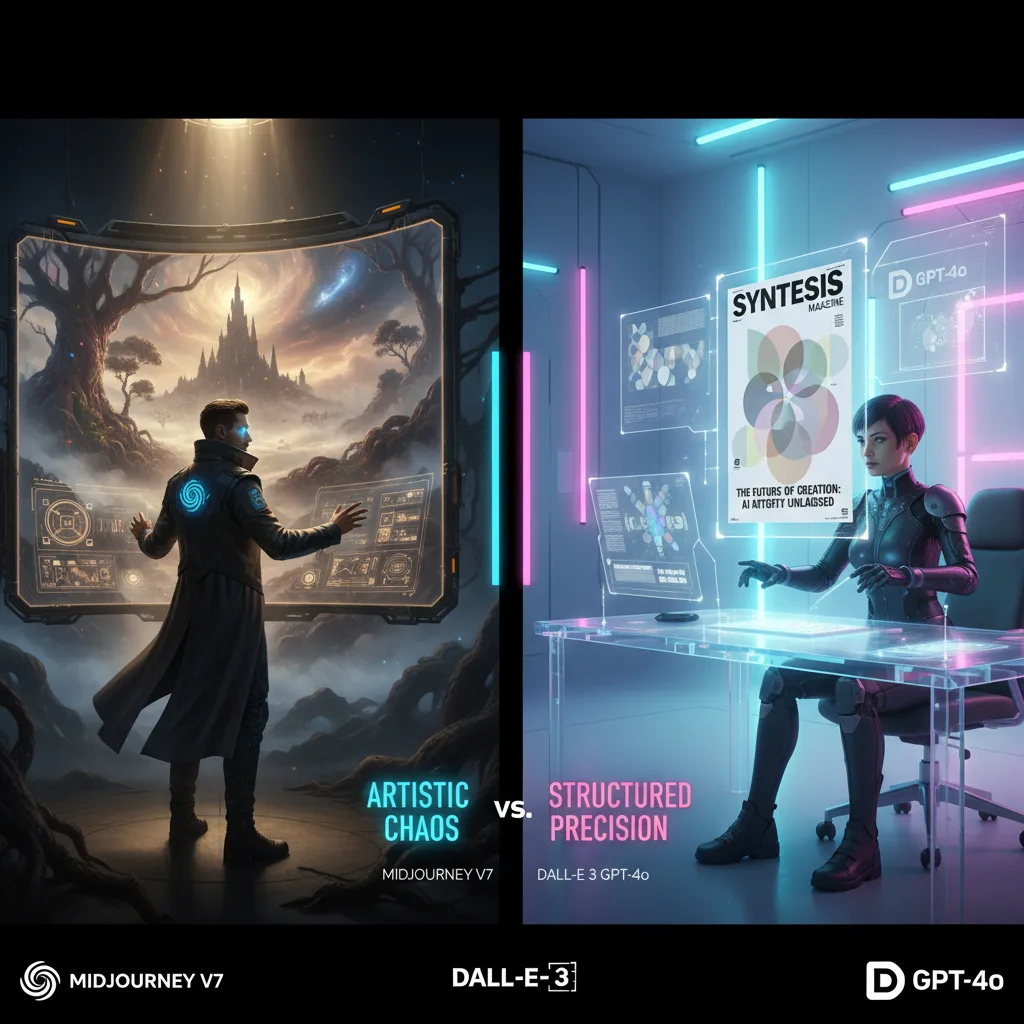
This comparison used to be framed as Midjourney V7 vs DALL-E 3 / GPT-4o Image. That is now too stale.
As of April 29, 2026, the real comparison is:
- Midjourney: V7 as the default paid product, with V8.1 Alpha as the preview track
- OpenAI: ChatGPT Images 2.0 in ChatGPT, plus GPT-image-2 on the API pricing page
The buyer question is not “which model is objectively better?” It is:
Do you need beautiful visual style, or do you need text-heavy, layout-heavy, chat-native creative output?
Quick Verdict
Choose Midjourney if you want:
- polished creator-facing images
- cinematic or editorial aesthetics
- fast visual exploration
- style and mood over literal instruction following
- a community-driven creative workflow
Choose ChatGPT Images 2.0 / OpenAI if you want:
- text-heavy visuals
- infographics and explainers
- ad concepts with copy
- chat-native iteration
- API access through GPT-image-2
- a workflow that non-designers can use quickly
For most artists and image-first creators, Midjourney remains the better aesthetic tool. For most marketers, educators, and teams making communicative visuals, ChatGPT Images 2.0 is now the more practical default.
What Changed In 2026
Midjourney’s current product story is not V6 anymore. Midjourney made V7 the default model in June 2025, then started shipping the V8 track in 2026. V8.1 Alpha is available as a preview, and Midjourney was still collecting high-resolution V8.1/V8.2 preference data in late April 2026.
OpenAI’s story changed even more. ChatGPT Images 2.0 launched on April 21, 2026, and OpenAI’s release notes say the model is available on all ChatGPT plans. “Images with thinking” is available on paid ChatGPT plans through Thinking and Pro model selections.
The older DALL-E 3 label still matters for this site’s OpenAI image pillar, but buyers should understand that the current OpenAI product is now much broader than old DALL-E 3.
Feature Comparison
| Category | Midjourney | ChatGPT Images 2.0 / OpenAI |
|---|---|---|
| Best fit | Aesthetic images and creative art direction | Text, layouts, infographics, and chat-native creative work |
| Current model story | V7 default, V8.1 Alpha preview | ChatGPT Images 2.0, GPT-image-2 API pricing |
| Text rendering | Improved, but not the main reason to buy | Strongest reason to test OpenAI first |
| Workflow | Web and Discord, style-forward | ChatGPT conversation, thinking mode on paid plans |
| API | No first-party public API | GPT-image-2 appears on official API pricing |
| Privacy | Stronger privacy costs extra on higher Midjourney tiers | ChatGPT and API privacy depend on plan/product settings |
| Best buyer | Artists, creators, visual directors | Marketers, educators, founders, developers |
Where Midjourney Wins
1. Image-first creative quality
Midjourney is still the better first choice when the goal is a polished image that feels art-directed. It is especially strong for:
- fashion/editorial concepts
- cinematic portraits
- album covers and posters
- moodboards
- fantasy and sci-fi art
- creator-facing social visuals
Its strength is not strict literal obedience. Its strength is taste.
2. Fast aesthetic exploration
Midjourney remains one of the fastest paths from vague creative intent to usable visual direction. If you are exploring mood, atmosphere, composition, or style, it often gets you closer faster than a more literal image system.
3. Creator culture and discovery
Midjourney is still built around a creator community. That can be a negative for privacy-sensitive teams, but it is useful for artists who learn by seeing how others prompt, remix, and iterate.
Where ChatGPT Images 2.0 Wins
1. Text-heavy images
This is the clearest OpenAI advantage. ChatGPT Images 2.0 is the better first test for:
- posters with readable copy
- product grids
- pitch-deck graphics
- educational visuals
- diagrams and explainers
- multilingual layouts
If words inside the image matter, start with OpenAI.
2. Conversational iteration
ChatGPT is easier for non-specialists. A marketer or founder can describe what they want, ask for changes, compare options, and keep iterating in the same conversation.
Midjourney can be powerful, but it still rewards learning a visual prompting culture. OpenAI is more approachable for business users.
3. API access
Midjourney still does not have a first-party public API. OpenAI does. GPT-image-2 is now listed on OpenAI’s official pricing page, which makes it the more direct choice for builders.
Pricing and Access
Midjourney uses subscription plans. Its official plans page still lists the familiar tiered subscription shape, and commercial usage rights depend on the plan and use case.
OpenAI’s current image access is split across ChatGPT plans and API pricing. The important update is that ChatGPT Images 2.0 is available on all ChatGPT plans, while thinking-mode images require paid plan access. For developers, GPT-image-2 has official API token pricing.
That means:
- Midjourney is easier to understand as a creator subscription
- OpenAI is easier to integrate into apps and business workflows
Which One Should You Choose?
Choose Midjourney if your output is mostly:
- art
- concept imagery
- social visuals
- posters
- editorial mood
- creative exploration
Choose OpenAI if your output is mostly:
- marketing graphics
- infographics
- ad variants
- educational images
- business visuals
- app-generated images
If you need hosted production control beyond both, compare FLUX.2. If you need Google-native image workflows, compare Nano Banana Pro and Gemini Image Generation.
Final Verdict
As of April 29, 2026, this is a split decision.
Midjourney wins for image-first creative quality. It is still the stronger tool when taste, style, and visual polish are the main job.
ChatGPT Images 2.0 wins for communicative visual work. If your image needs readable text, structured layout, or business-friendly iteration, OpenAI is now the better first stop.
For a broader ranking, read our best AI image generators 2026 guide.