


Introduction to Z-Image and Market Context
In January 2026, Z-Image launched its precision-controlled AI image generation platform, powered by Alibaba’s Tongyi-MAI technology. This launch signifies a pivotal shift in the AI image generation market, which is expected to grow from $3.16 billion in 2025 to a projected $30.02 billion by 2033. The platform aims to address the challenges faced by professionals in AI image generation, such as maintaining character consistency and achieving precise spatial control. By offering advanced structured controls, Z-Image enhances the reliability and quality of AI-generated visual content, making it more appealing for commercial use.
The Evolution of AI Image Generation Models
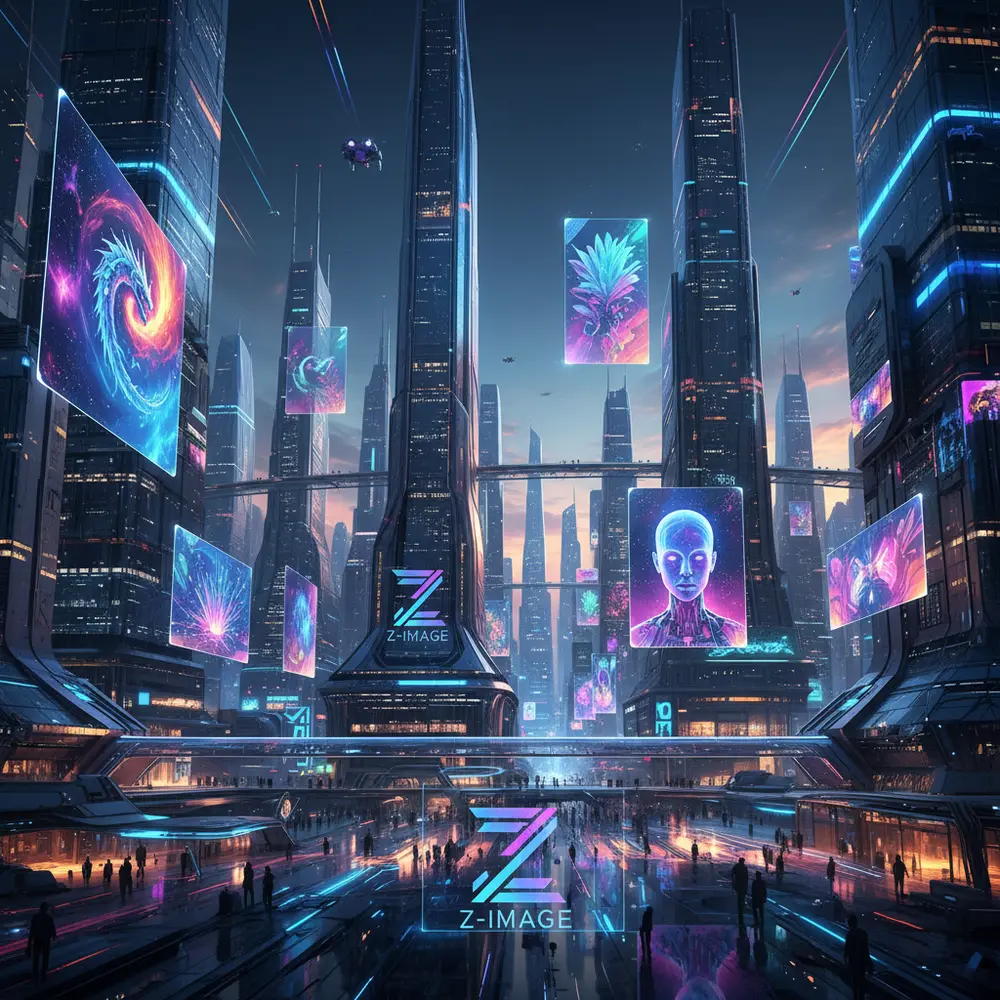
The evolution of AI image generation models has progressed significantly, particularly with the introduction of Z-Image’s precision-controlled platform in January 2026. This innovation marks a departure from basic text-to-image prompts, moving towards controlled generative models that offer enhanced precision and consistency in visual content creation.
Key milestones in the industry have paved the way for these structured controls. For instance, the development of diffusion models and transformer architectures has enabled more sophisticated image generation techniques. As the market for AI-generated images expands, projected to grow from $3.16 billion in 2025 to $30.02 billion by 2033, enterprise demand plays a crucial role in driving this shift. Companies increasingly seek reliable and controllable solutions that can produce professional-grade outputs.
Z-Image addresses long-standing challenges in AI image generation, such as maintaining character consistency across multiple outputs and ensuring accurate multilingual text rendering. These advancements are essential for creative professionals aiming to streamline workflows and uphold brand identities across various platforms. Understanding these developments is crucial for navigating the evolving landscape of AI image generation.
Technical Architecture: S3-DiT and Distillation Innovations
Z-Image utilizes a Scalable Single-Stream Diffusion Transformer (S3-DiT) architecture, which stands out for its parameter efficiency, operating with only 6 billion parameters. This is significantly lower than many existing models, which often require upwards of 10 billion parameters to achieve similar performance levels.
The S3-DiT architecture is designed to facilitate few-step, high-quality inference, addressing common challenges in AI image generation. Key innovations include the Decoupled-DMD (Decoupled Multi-Decoder) and DMDR (Dynamic Multi-Decoder Routing) mechanisms. These features enhance the model’s ability to generate high-fidelity images with fewer computational resources and in less time.
According to Z-Image, these advancements allow for faster generation times while maintaining the quality expected in professional-grade outputs. The architecture’s design prioritizes both speed and precision, making it well-suited for creative professionals looking for reliable AI-generated visuals.
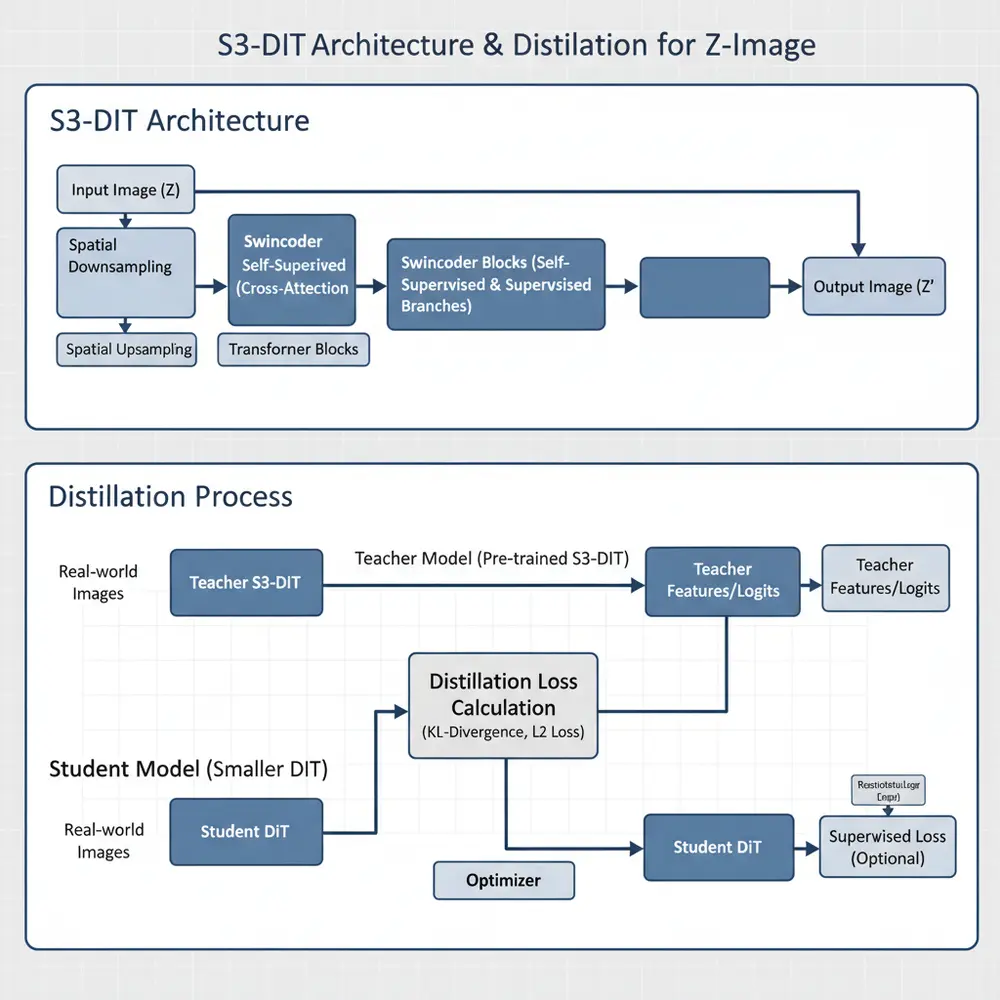
Our take is that the S3-DiT model represents a substantial step forward in the efficiency of AI image generation. By reducing the parameter count while improving output quality, Z-Image is likely to appeal to a broader range of users, particularly those in enterprise settings who require consistent and high-quality visual content.
Structured Control Mechanisms in Z-Image
Z-Image introduces advanced structured control mechanisms that enhance precision in AI image generation. Key features include pose alignment, proportion adjustment, and viewpoint consistency, enabling users to fine-tune outputs with accuracy.
The platform offers over 50 lens simulation presets, allowing for pan, tilt, zoom, and focus adjustments, which facilitate the creation of images that closely mimic real-world photography. This level of control is crucial for professionals seeking to maintain brand identity across various visual outputs.
Additionally, Z-Image supports cross-image matching, ensuring consistency across multiple generated images. This capability is vital for projects requiring a unified visual style, particularly in commercial applications where brand coherence is essential.
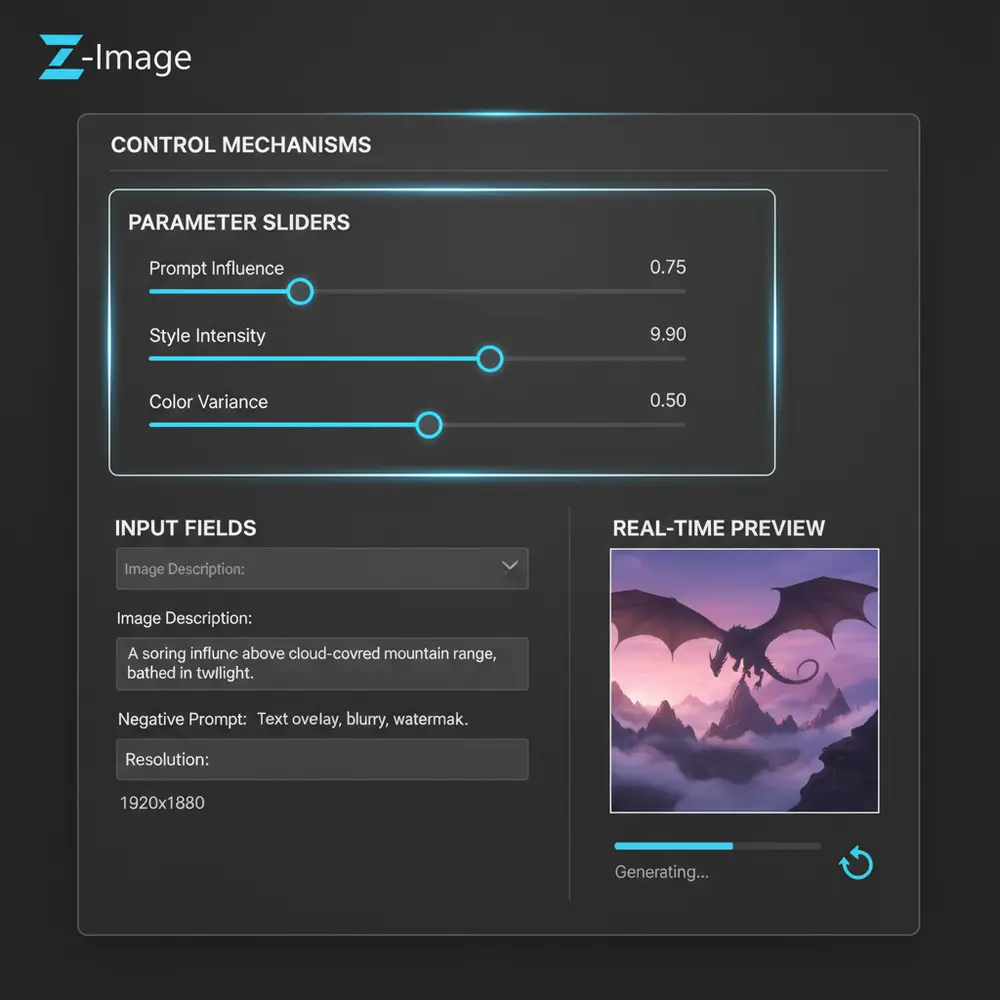
These advancements reflect Z-Image’s commitment to addressing the limitations of traditional AI image generation methods, making it a valuable tool for creative professionals.
Hands-On Guide: Getting Started with Z-Image
To get started with Z-Image, users first need to set up an account on the platform. This process is straightforward, requiring only basic information and email verification. Once logged in, users are greeted by a user-friendly interface that showcases various tools and templates designed for precision-controlled image generation.
Creating your first AI image is simple. Z-Image offers a variety of templates that guide users through the process. By selecting a template, users can input specific parameters like pose alignment and viewpoint consistency, ensuring their images meet desired standards.
Crafting effective prompts is crucial for optimal results. We recommend using structured controls to define elements such as style, color, and composition clearly. This approach not only enhances the quality of the generated images but also maintains consistency across multiple outputs. Experimenting with different prompts will help users understand how to leverage Z-Image’s capabilities fully.
Practical Workflow Tips for Creative Professionals
Integrating Z-Image into existing design and production pipelines can enhance creative workflows significantly. Professionals can seamlessly incorporate the platform’s precision controls to ensure that generated images align with project requirements and brand guidelines. This integration promotes efficiency and reduces time spent on revisions.
Collaborative review processes are essential when utilizing Z-Image. Teams can leverage version control strategies to track changes and provide feedback on generated images. This ensures that all stakeholders are aligned and that the final outputs meet expectations.
Consistency across large-scale campaigns is another critical advantage of Z-Image. The platform’s capabilities allow for uniformity in style and quality, which is vital for maintaining brand identity across various channels and formats. This level of control is particularly beneficial for enterprises looking to execute cohesive marketing strategies.
Comparative Analysis: Z-Image vs Midjourney, Stable Diffusion, Flux, Adobe Firefly
Comparative Analysis: Z-Image vs Competitors
In January 2026, Z-Image debuted as a precision-controlled AI image generation platform, leveraging Alibaba’s Tongyi-MAI technology. This launch has positioned it against established players like Midjourney, Stable Diffusion, Flux, and Adobe Firefly.
Performance and Speed
Z-Image boasts faster generation times, reportedly improving speed by 50% compared to Midjourney and Stable Diffusion. Flux maintains a competitive edge with its rapid output, while Adobe Firefly focuses on integration with Adobe tools, impacting its speed but enhancing usability for creative professionals.
Cost Comparison
Z-Image operates on a subscription model, with pricing starting at $29/month, making it more accessible than Adobe Firefly, which can exceed $50/month. Midjourney and Stable Diffusion offer varied pricing tiers, appealing to different user needs.
Strengths and Weaknesses
Z-Image excels in precision control, allowing for detailed adjustments that enhance consistency and brand identity. However, it may lack the artistic flair seen in Midjourney’s outputs. Stable Diffusion offers flexibility but can struggle with character consistency. Flux is robust for speed but may not match Z-Image in detail accuracy.
Ideal Use Cases for Z-Image
Z-Image is particularly suited for industries requiring precise branding and consistent character representation, such as advertising and gaming.
Pricing and Enterprise Options
Z-Image offers various subscription tiers tailored to different user needs. The basic plan starts at $29 per month, while the premium tier costs $99 per month, providing enhanced features and faster processing times. For enterprises, Z-Image presents customized plans, including dedicated support and service-level agreements (SLAs) to ensure reliability and performance.
The company claims that its enterprise-grade support includes 24/7 assistance and tailored onboarding, which can significantly enhance the user experience for organizations.
This pricing structure reflects the platform’s emphasis on delivering value through precision-controlled image generation, appealing to both individual creators and large-scale enterprises.
We’re watching how Z-Image’s pricing strategy positions it against competitors in the growing AI image generation market.
Future Outlook for Controlled AI Image Generation
As we look ahead to the future of precision-controlled AI image generation, several trends are emerging. The integration of Z-Image with virtual reality (VR) and augmented reality (AR) platforms is expected to enhance user experiences by providing immersive environments for generated content. Additionally, the potential for seamless integration with 3D pipelines could revolutionize workflows in creative industries.
Z-Image aims to address key challenges in reproducibility and accuracy, with a roadmap that emphasizes improved character consistency and spatial control. According to the company, these advancements will significantly benefit professionals seeking reliable and commercially viable AI solutions, aligning with the growing market demand.