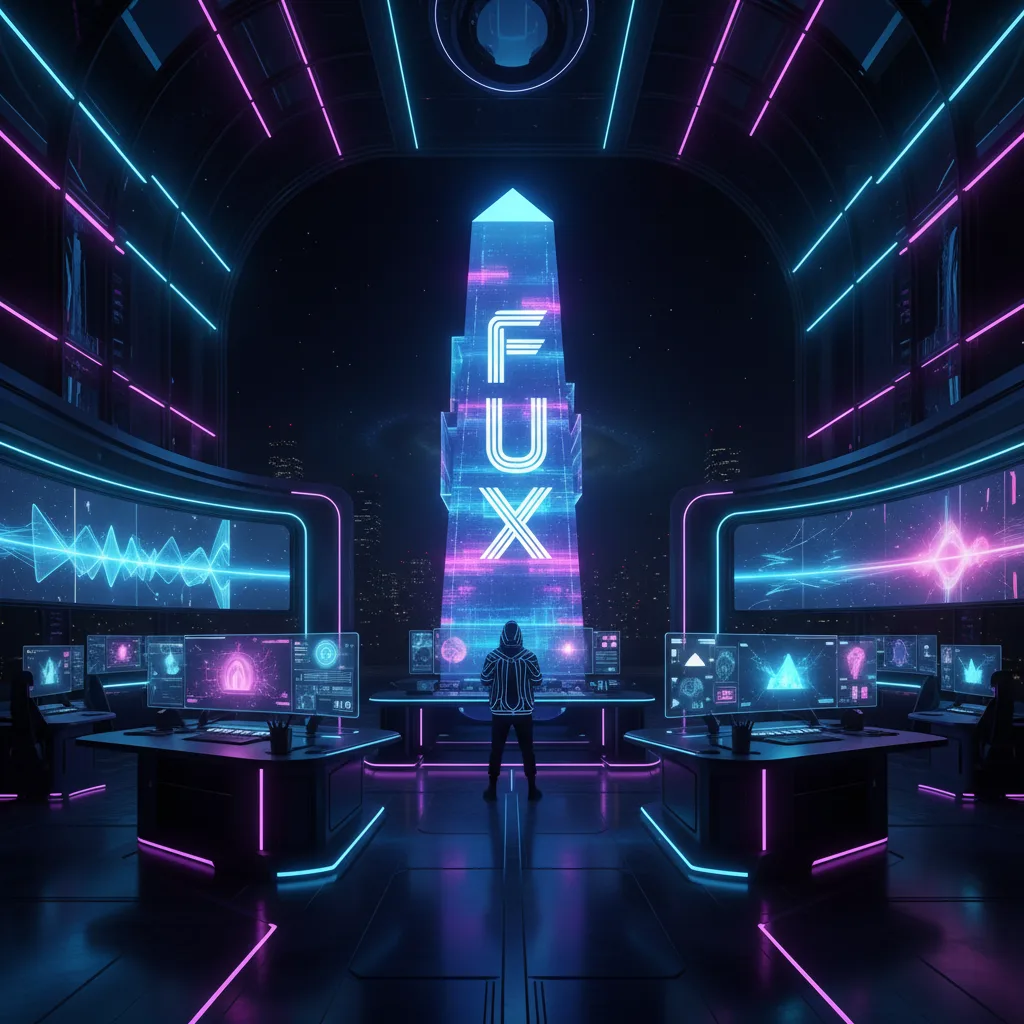


The open-source AI community has a new champion. Black Forest Labs, a team founded by the original creators of Stable Diffusion, has released Flux.1, a suite of models that arguably dethrones Midjourney v6 as the king of AI image generation.
What makes this release historic isn’t just the quality—it’s the accessibility. Flux.1 brings state-of-the-art (SOTA) generation to local GPUs, shattering the walled garden model that has dominated 2024.
The Three Models
Flux.1 isn’t a single model; it’s a family of three, catering to different needs:
1. Flux.1 [pro]
The flagship model. It offers SOTA performance with top-tier prompt adherence, visual quality, and image detail.
- Availability: API only (via Replicate, Fal.ai, etc.)
- Best For: Enterprise use, commercial applications where quality is paramount.
- Verdict: Matches or exceeds Midjourney v6.0 in blind tests.
2. Flux.1 [dev]
An open-weight model distilled from [pro]. It is guidance-distilled, meaning it’s more efficient while retaining most of the quality.
- License: Non-commercial.
- Availability: HuggingFace.
- Best For: Researchers, hobbyists, and developers building on top of the architecture.
3. Flux.1 [schnell]
German for “fast,” and it lives up to the name. This is a latent adversarial diffusion distillation model that runs significantly faster.
- License: Apache 2.0 (Open Source).
- Best For: Local deployment, real-time applications.
Why This Matters
For the past year, if you wanted the absolute best AI images, you had to pay a subscription to Midjourney. Open-source models like SDXL were good, but they struggled with:
- Typography: Rendering clear text.
- Complex Composition: Following multi-subject prompts.
- Hands: The eternal struggle of AI.
Flux.1 solves all three. In our testing, Flux.1 [dev] rendered complex text overlays perfectly on the first try, a feat that often takes Midjourney multiple rerolls.
The Tech Behind It
Flux.1 is a 12-billion parameter rectified flow transformer. That’s massive. For context, SDXL has a 3.5B parameter base model and 6.6B parameter ensemble pipeline. This huge increase in model size allows for a much deeper understanding of concepts and prompts.
“We believe that the future of generative AI should be open and accessible to everyone.” — Black Forest Labs
How to Run It
You can run Flux.1 [schnell] and [dev] locally if you have the VRAM.
- Requirement: 24GB VRAM recommended for [dev], though quantized versions are already running on 12GB and even 8GB cards via ComfyUI.
- Software: ComfyUI, Forge, and SwarmUI have already added support.
Verdict
Flux.1 is the “GPT-4 moment” for open-source image generation. It forces closed-source competitors to innovate or perish. For creators, it means more control, lower costs, and finally, the ability to generate text-heavy images without a subscription.